Week 1
A New Word
- The old word is spent — pick a different one
- Charged indoors with no distraction at all
- Never used unless you can guarantee it works
- Thirty repetitions before it leaves the house
Module · recall
Six weeks to a recall that works with something happening, built on a line.
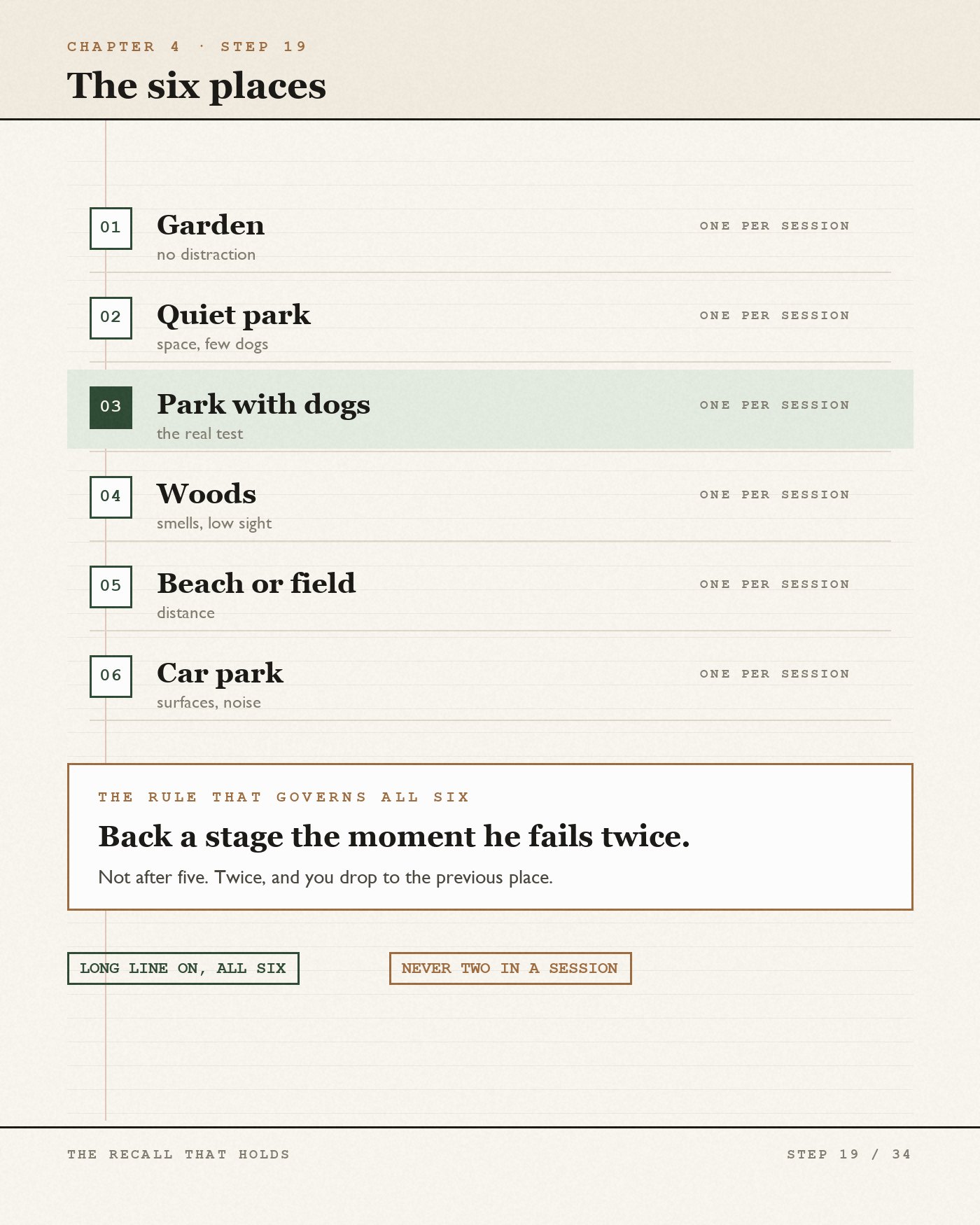
Recall is the one command with a cost attached: the dog gives up something he wants. Which means it has to be built where nothing is happening and then proofed, deliberately, in six places where something is. Six weeks, a long line, and one word you never waste.
Take the module$37one-time · 60-day money-back guarantee
What you get out of it
What a handler does differently
Police, detection and assistance dogs are not trained with more force than yours. They are trained with better information. Six differences, none of which costs anything, and all of which are missing from almost every household.
None of this is a secret. It is simply what gets taught on a handler's course and almost never reaches the person who bought a puppy, because nobody wrote it down in a form that fits twenty minutes a day.
Before and after
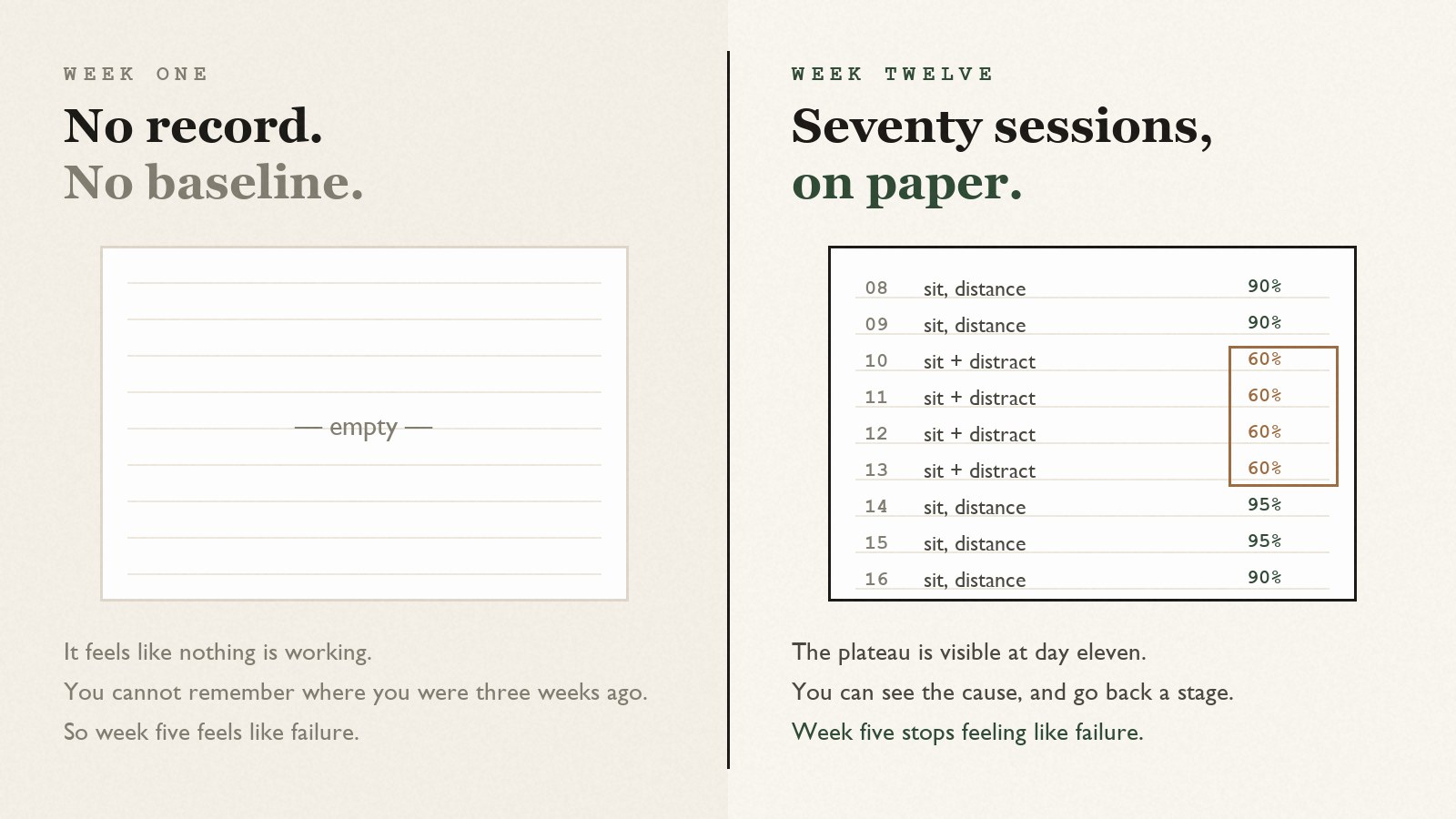
We are not going to show you somebody else’s dog and call it proof. We will show you the thing twelve weeks actually changes, which is what your own logbook says.
Why it fails exactly when it matters
You call, he ignores you, you call again, louder. Nothing happens to him. The word now means roughly nothing, and it took about forty repetitions to get there.
Working dogs have a recall that holds under distraction because it was never once called in a situation where it could fail. That restraint — not calling unless you can make it work — is most of the module.
How a step is written
Where you are, what the distraction is, how long the line is, where the marker lands, and when you are allowed to move on.
Week 1
Week 3
Week 5
Thirty-one more steps across the new word, the line, distance, the six places, the emergency recall and the day the line comes off.
The method, in pictures
Sample pages
What you get
Thirty-four steps across five chapters — the new word, the long line, distance, the six places, and the emergency recall.
Then proofed where it can.
The central discipline: if you cannot make it work, you do not say the word. Most ruined recalls were ruined this way.
A second word, charged with something extraordinary, used twice a year and never spent on convenience.
Certain breeds and certain histories mean off-leash is not a realistic goal, and the module says so instead of selling you hope.
The ebook
Six weeks to a recall that works with something happening. Thirty-four steps, five chapters.
Take the module$37one-time · 60-day money-back guarantee
Instant digital download. One-time payment of $37, with a 60-day money-back guarantee. Educational material about dog training. This is not veterinary advice, not a behavioural diagnosis, and not a treatment. Aggression or biting is a matter for a veterinary behaviourist in person.
Chapter five is honest about breeds and histories where a long line is the realistic answer for life. That page exists because selling hope here is dangerous.
Ten metres, flat, attached to a harness. Never a retractable lead, and the module explains the mechanical reason.
Usually not, and chapter one explains why. A word that has been ignored forty times carries that history.
A second word, charged with something extraordinary, used perhaps twice a year. It is kept separate so it is never worn out.
When three written conditions are met, and the module states them rather than giving you a week number.
It helps. The module recaps the marker and the timing in chapter one for anyone starting here.
Write within 60 days and you get your money back. You keep the file.
Built where it cannot fail, then proofed in six places where it can.
Take the module$37one-time · 60-day money-back guaranteeThis is educational material about dog training. It is not veterinary advice, not a behavioural diagnosis, and not a treatment for any condition. Aggression, biting, sudden changes in behaviour, and anything that frightens you or anyone else are matters for a veterinarian or a qualified veterinary behaviourist in person — not for a book. Dogs are individuals and no training method guarantees a result.